


ZOMBIE VILLAGES
By An Alien Eye
On packets of land all over the Kent countryside, housing developments are rising up, and what is surprising about these is that their designs dare to pull off an extraordinary stunt by insinuating that they have existed here far longer than they actually have. That although these are new builds, their much hackneyed styles are resplendent of a golden time before the modern age of innovation exemplified by the Twentieth Century such that they give the impression of time-old agelessness. However, these housing estates are emulating not the garden cities of their forebears whose concerns were about the negative impacts that filthy industrial cities had on the physical, mental and spiritual well-being of unfortunate urban dwellers, prompting these philanthropic master builders to design decent affordable well proportioned houses out towards the edge of the countryside in either an effort to improve Man’s lot, or perhaps to aspire to loftier sentiments in thinking they were building new Jerusalems. Instead, the new architects of the future are responding to the call of the market in order to maximise the profit of property to add value to their shareholder’s year end dividends. And despite there being a passing resemblance to places such as Welling and Bournville, these many new settlements simulating the irregularities inherent in vernacular design, are not for the general public good, but for a dwindling proportion of the population that are still able to muster a huge deposit just sufficient to get a mortgage for a property at an over inflated price. Yet, there appears to be a taste for such nostalgic builds, perhaps because there are so few other options available, but also because it seems to appeal to an idea of a sense of place, one that is cultivated in the collective mind through archaic representations of home that induce many to literally buy into this illusion. So, modern materials and building techniques are eschewed for traditional designs that wouldn’t look out of place a hundred, or even two hundred years ago.
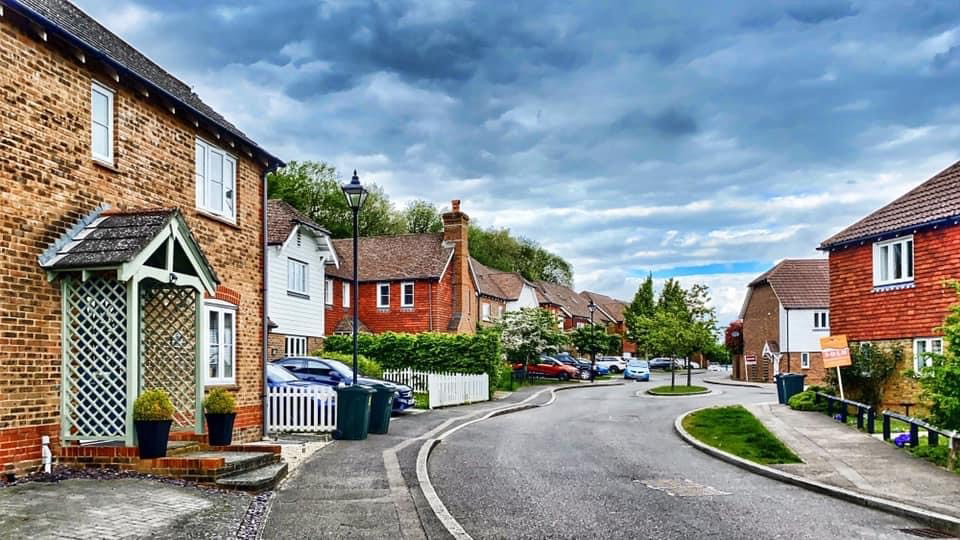
Taking place in our midst therefore is a building revolution which is not one that is forward looking, but one that harkens back to a prelapsarian vision of a past dressed in the myth of village living, a place of simpler truer values to inspire a nobler spirit of Englishness. Contrary to this image however, is a reality of living that has no real organic life of its own, no social centre predicated on long held traditions that would have hitherto bound a community together. These are in actuality satellite villages for self seeking individuals, and the sense of community that the buildings imply doesn’t exist. Instead, the social nexus is the Tesco supermarket, the local shopping mall, and the retain park, accessible only by car. And vehicle ownership is also necessary where both partners in a conventional family unit travel far away to work, so that the streets where they live are denuded of any life during the day. It is only in the evenings that these hard pressed mortgage payers return, and then only to the insides of their own homes. In summarising this backward looking idyl of the future, its grand plan supplies nothing of what many people are really searching for, that of real community and connection, and what it instead produces are merely vacuous stage sets that in every other respect, are zombie spaces.