


Dead Man’s Corner, Whitstable Harbour

By Whitstable
Tucked into the eastern side of Whitstable Harbour is a spot with one of the town’s more arresting names: Dead Man’s Corner. Today it’s a bright, welcoming deck where people sit and watch the harbour go by — but the name is older and darker than the decking, and it’s worth knowing the story behind it.
Where the name comes from
Here’s where fact and folklore part company, so it’s worth being careful. By local tradition, the corner earned its grim name because it was where the sea gave up its dead — the sheltered angle of the harbour where, the story goes, the bodies of those lost at sea would sometimes be washed ashore. Whether that’s literal history or a tale grown up around a bleak-sounding name, no one can now say for certain; the sources that mention it are careful to call it legend rather than record.
What’s certainly true is the physical reason a story like that could take hold: this is the corner where the harbour’s currents naturally gather whatever the sea brings in. Flotsam, jetsam, driftwood and shells all tend to collect here — so it’s easy to see how a sheltered spot known for catching what the tide carried could come, in the town’s imagination, to catch the drowned as well.
The working corner
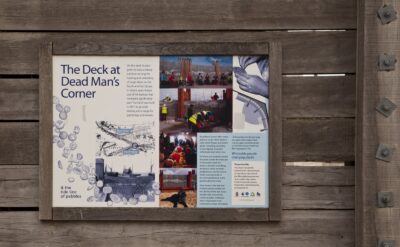
Long before it was a place to sit, this corner had a thoroughly practical life. It was part of the harbour’s railway — the sidings and junction that served the loading and unloading of the cargo ships, in the days when the Canterbury and Whitstable Railway, the “Crab and Winkle” line, ran right down onto the quays. Coal came in, catches and cargo went out, and the corner was part of the busy, unglamorous machinery of a working port.
The Deck
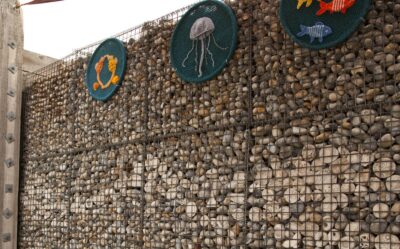
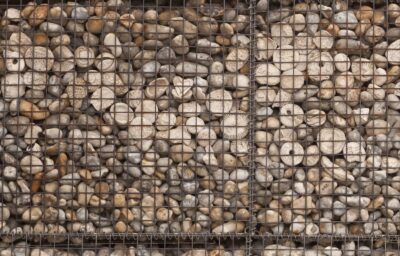
In 2011 the corner was given a new life. The Deck at Dead Man’s Corner — a seating and performance space — was built here, opened that May, at a cost of around £100,000, a project of Canterbury City Council and the Whitstable Improvement Trust with a National Lottery grant. Designed by Roger Seijo, it’s a thoughtful piece of work: shaped like the bow of a ship, edged by a long wall of gabions — steel-mesh baskets filled with pebbles, echoing the shingle beach — and its timber uprights built to the same pattern as the groynes along the shore.
Its loveliest detail is a “tide line” running along the wall: a pale line of over 1,200 decorated ceramic pebbles, each one made by a local person in a series of community workshops. It’s a fitting touch — a corner once associated with what the tide washed up, now marked by a tide line the town made itself.
Visiting
You’ll find Dead Man’s Corner on the eastern side of Whitstable Harbour. It’s a free, sheltered spot to sit with a coffee or an oyster and watch harbour life go by, and it doubles as a stage — during festivals and events, including the Whitstable Biennale, the Deck comes alive with performance. A quiet corner with a dark name and a warm present: very Whitstable.
If you know more about how Dead Man’s Corner got its name, we’d love to hear.